R a w C o l l a b o r a t i v e
G e n e r a t i v e D e s i g n
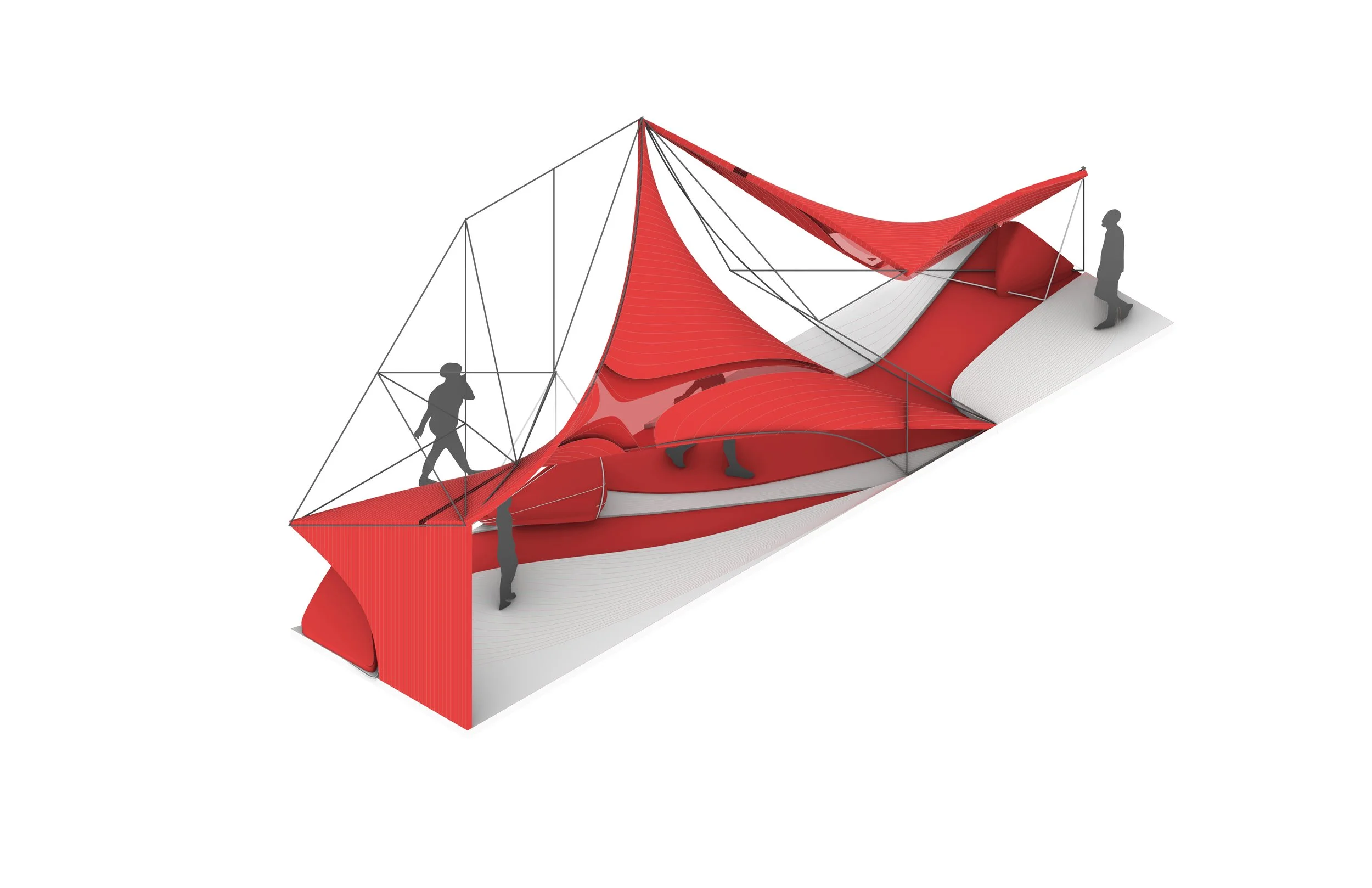
Developed during my architectural internship at Common Ground Practice for a design competition in India, this project explores the intersection of algorithmic logic and fluid, organic form. I utilised this opportunity to push my understanding of computational workflows by developing a custom Grasshopper script to bridge abstract particle physics with functional architectural space. The final pavilion serves as a dynamic interplay between a rigid skeletal frame and a flowing, high-contrast red membrane. The form was analysed through multiple plans and elevations to ensure human-scale functionality and structural integrity, featuring sharp, angular support points that anchor the fluid surfaces to the ground terrain.
Project Type
Competition Entry
Company
Common Ground Practice, India
Supervisor
Priyamwada Singh
Role
Computational Design Lead
Time
Summer 2024
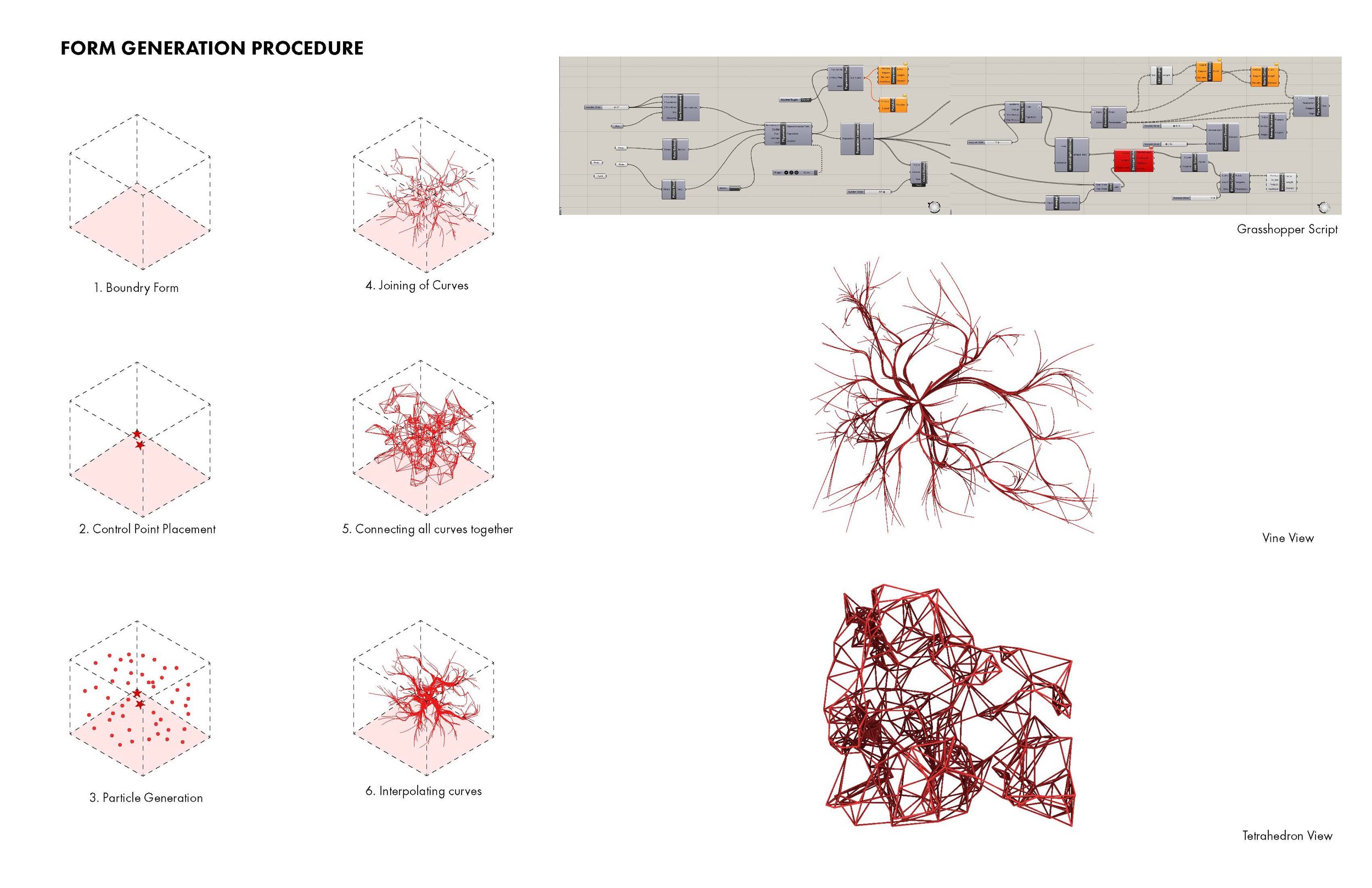
These initial computational experiments document the procedural evolution of boundary volumes into complex organic “vine” and structural “tetrahedron” geometries through custom Grasshopper scripts.
Form References
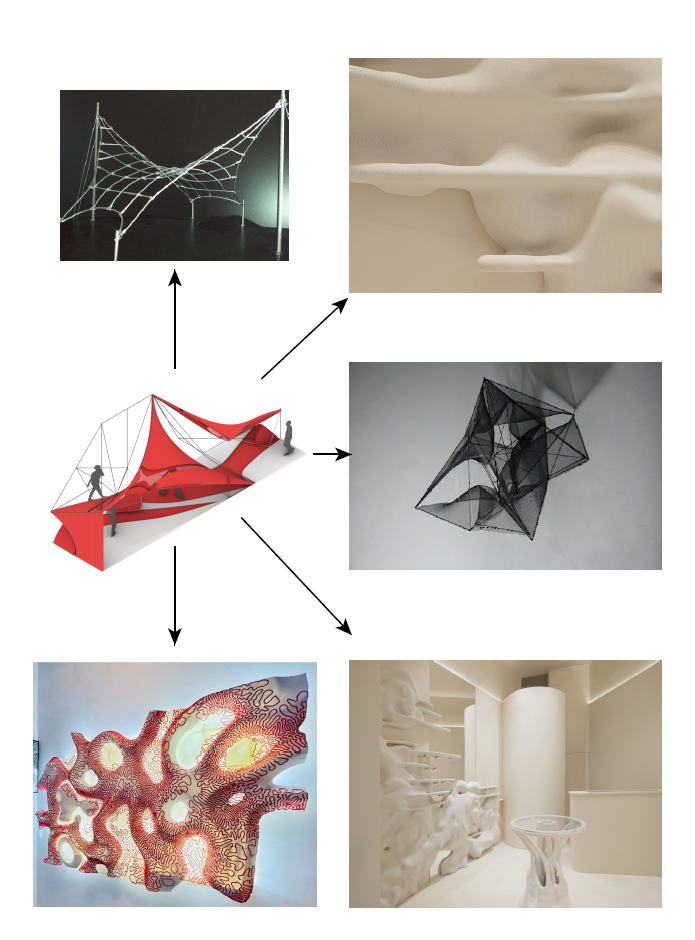
The final form emerged from a convergence of diverse precedents: the high-performance logic of tensile cable nets, the crystalline complexity of faceted geometric webs, and the fluid forms of parametric interiors.
Form Generation Diagram
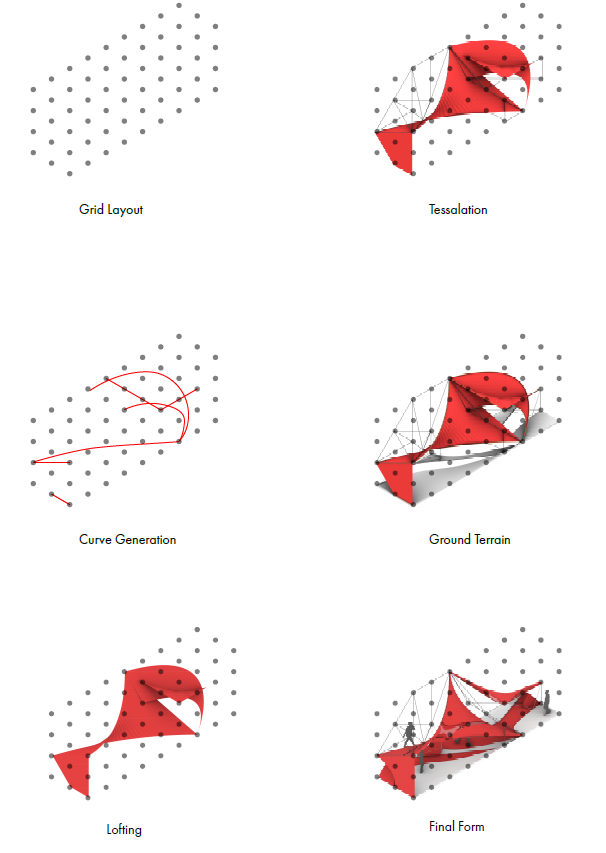
The process follows a rigorous path: establishing a Grid Layout, executing Tessellation, and utilising Curve Generation to define spatial boundaries. The transition from Ground Terrain to Lofting creates a continuous red tensile membrane, anchored at strategic points to support human-scale interaction.
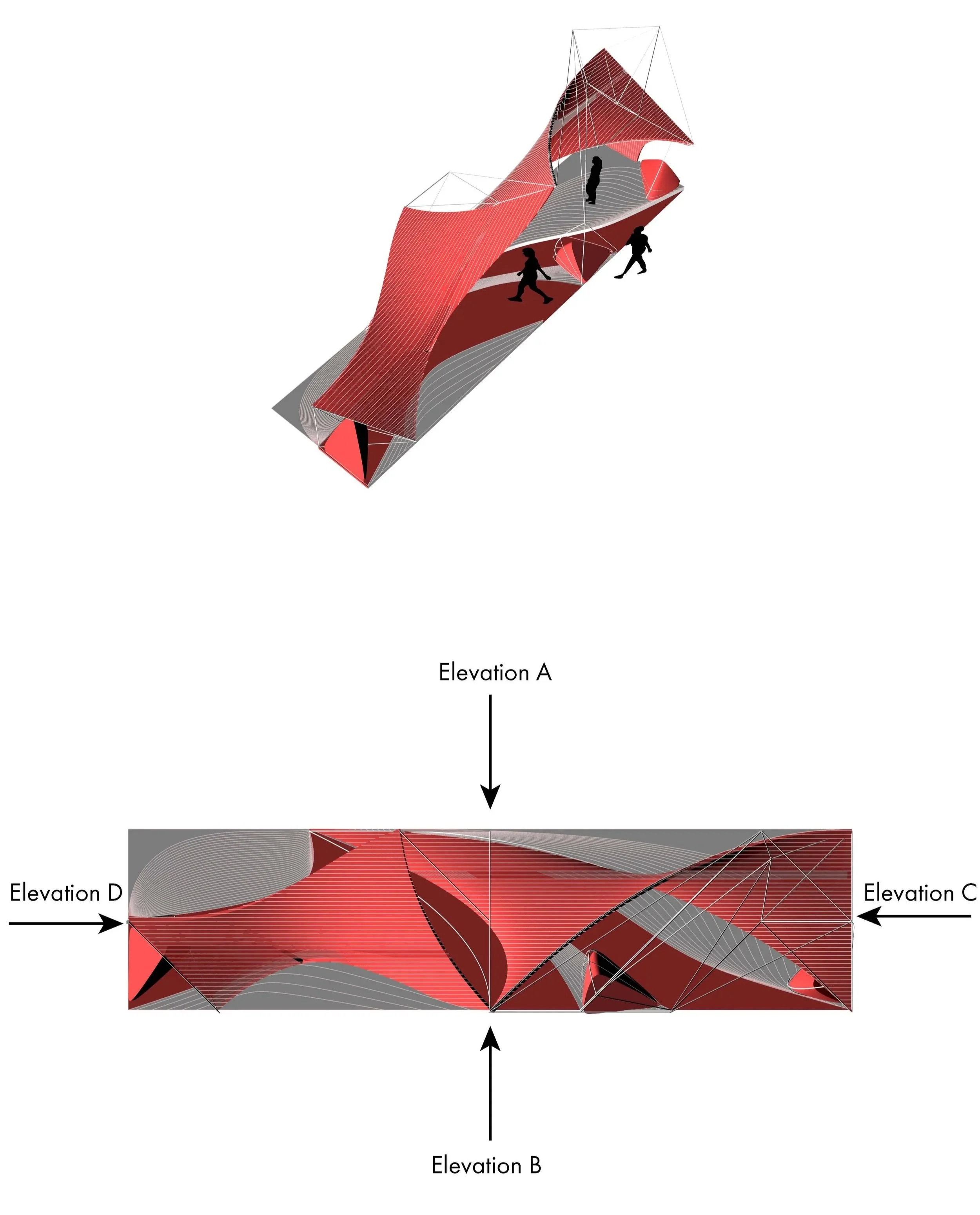
Axonometric
Plan View
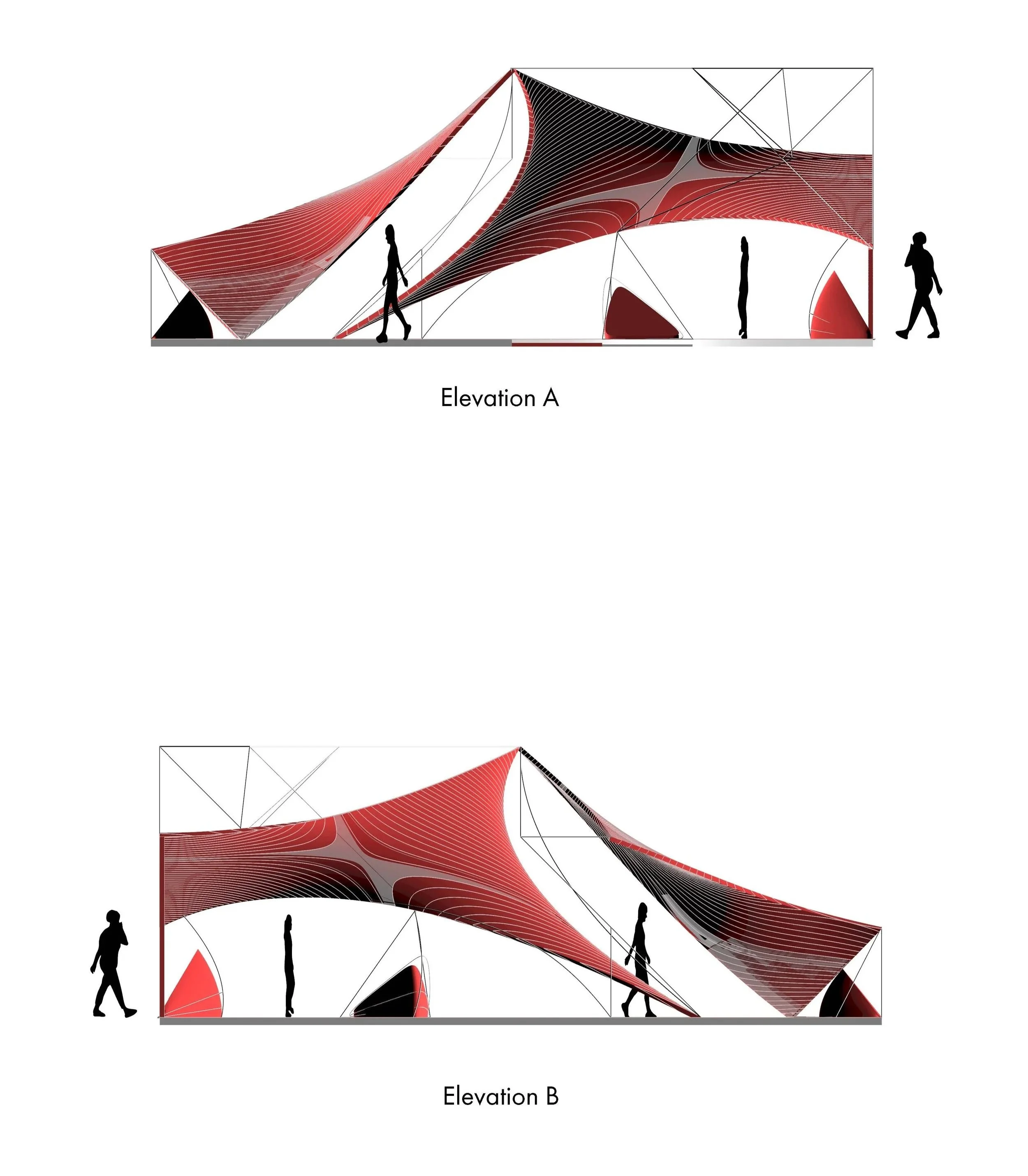
These orthographic projections—comprising the Plan View and Elevations A and B—rigorously resolve the pavilion’s algorithmic complexity into a functional architectural system.